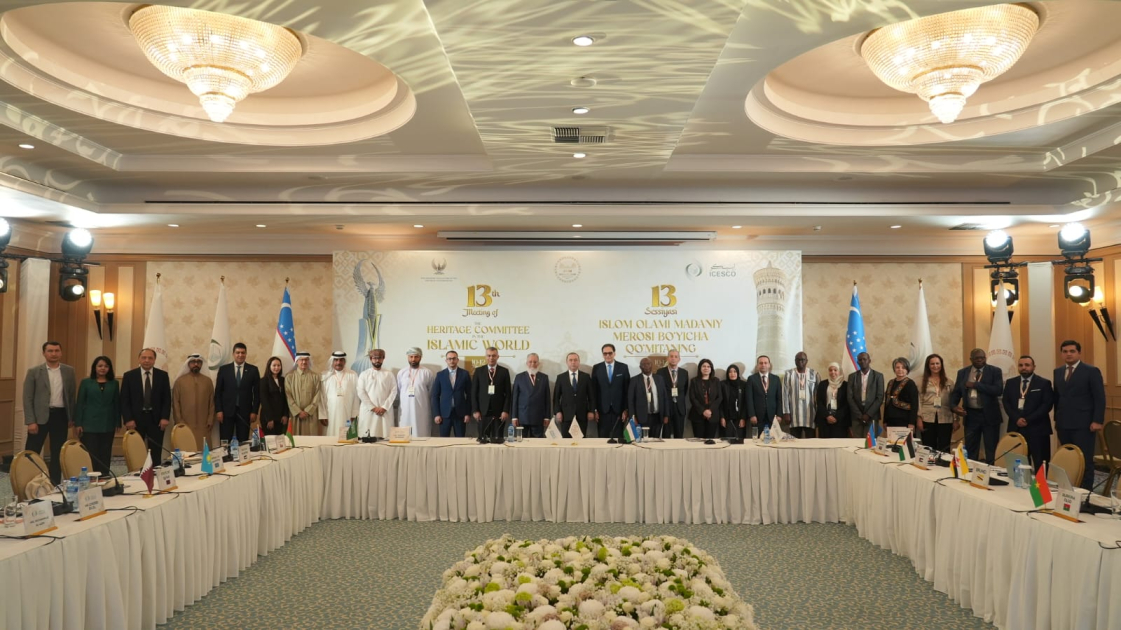
HUMAN Hub prepared and submitted nomination dossiers for three tangible cultural heritage sites to the ICESCO World Heritage List on behalf of the Ministry of Culture of the Republic of Azerbaijan. Two of the three nominations were accepted to the organization's main list, and the third was accepted to the tentative list.
Scope of Work
Each nomination required extensive historical research, architectural documentation, conservation assessment, and alignment with international heritage frameworks including the Venice Charter (1964), the Nara Document on Authenticity (1994), and ICESCO's own guidelines for managing heritage in post-conflict situations in the Islamic world. The dossiers were structured to meet the formal inscription requirements adopted by the 6th Meeting of the Islamic World Heritage Committee.
Across all three nominations, our team compiled site histories spanning several centuries, assessed current conservation conditions and legal protections, documented management structures and community involvement, mapped core and buffer zones, and built the case for each site's outstanding civilizational and cultural value within the Islamic world.
Site 1: Shusha City State Reserve Status: Accepted to the ICESCO World Heritage Main List
The Shusha dossier covered a historic urban settlement built primarily in the 18th and 19th centuries, founded in 1752 as the capital of the Karabakh Khanate by Panahali Khan Sarijaly Javanshir. The city was chosen for its strategic plateau location and became one of the most significant "city-fortress" settlements among Azerbaijan's khanate centers.
Our work documented the site's architectural and urban planning heritage, including its central Meydan square, three historic trade streets (Rasta Bazaar, Ashaghy Bazaar, and Sheytan Bazaar), religious buildings, caravanserais, and the fortress walls with the Ganja Gate. We compiled detailed records of ongoing conservation efforts: the first phase of fortress wall conservation (carried out with Atelier Erich Pummer GmbH and Conco CJSC), the restoration and reopening of the Vagif Mausoleum in 2021, and the ongoing restoration of the Upper Govhar Agha Mosque funded by the Heydar Aliyev Foundation.
The dossier also addressed the broader cultural revival of Shusha, including the "Master Plan for the Development of Shusha City until 2040," the "Pearls of the Shusha Culture" initiative, and the revival of the traditional Kharibulbul Folklore Festival. The nomination positioned Shusha within a framework of post-conflict heritage recovery, with all conservation activities conducted in accordance with UNESCO, ICOMOS, and ICCROM guidelines.
Site 2: Aghdam "Imarat" Historical and Architectural Museum Complex Status: Accepted to the ICESCO World Heritage Main List
The Aghdam dossier documented a dynastic burial ground and ceremonial complex dating to the mid-18th century, established by the ruling dynasty of the Karabakh Khanate as a site of spiritual authority and political legitimacy. The complex includes five nationally registered heritage components (inventory Nos. 4026-4030): the mausoleums of Panah Ali Khan, Ibrahim Khalil Khan, and Mehdigulu Khan, a türbe (mausoleum), and a Qibla-oriented prayer room.
This nomination required particularly detailed technical documentation due to the site's post-conflict condition. We documented the 2022-2024 scientific conservation campaign, which included 3D laser scanning, GIS-based mapping, digital photogrammetry, stabilization of collapsed structural elements, consolidation of domes and facades using traditional stone masonry, and reconstruction of the ceremonial platform and perimeter walls. The restoration was carried out in partnership with ACN Restauri S.r.l. (Italy) using reversible materials in line with ICOMOS standards.
Our team also documented the archaeological findings at the site, including 213 confirmed Muslim graves and DNA-based verification of notable burials such as that of Khurshidbanu Natavan, a prominent 19th-century poetess and philanthropist. The dossier mapped core (0.6 ha) and buffer (3.3 ha) zones to UNESCO Annex IV standards and outlined the site's Heritage Management Plan for 2025-2030. We positioned the complex within ICESCO's Strategic Action Plan 2021-2030 and the Framework for Islamic Sites of Memory.
Site 3: Ordubad Historical-Architectural Reserve Status: Accepted to the ICESCO Tentative List
The Ordubad nomination covered an Islamic feudal trade city in Azerbaijan's Nakhchivan Autonomous Republic, with major development phases spanning the 15th through 18th centuries. Situated along the southern branches of the Silk Road, Ordubad served as a caravan city and commercial hub known for silk production, fruit cultivation, and thriving marketplaces.
Our team documented the city's radial street system, its five historic quarters (Ambaras, Kurdtatal, Mingis, Sar Sheher, and Uch), and key architectural landmarks including the central glass mosque, medieval market square, caravanserais, and the Ambaras citadel. The nomination assessed the site's authenticity (preservation of original street networks, building materials, and spatial configurations) and integrity (intact functional zoning, uncompromised historic layout, preserved surrounding landscape including the Ordubadchay River, orchards, and mountain setting).
We also documented the multi-institutional management framework involving the Ministry of Culture, the Nakhchivan Autonomous Republic's Department of Cultural Heritage, the Ordubad City Administration, and the Azerbaijan National Commission for ICESCO. The nomination argued for Ordubad's inclusion as a representative of an underrepresented heritage category: Islamic feudal trade cities characterized by mountainous urban morphologies.
Results
Shusha City State Reserve and Aghdam "Imarat" Historical and Architectural Museum Complex were both accepted to the ICESCO World Heritage Main List. Ordubad Historical-Architectural Reserve was accepted to the ICESCO Tentative List, positioning it for potential future inscription to the main list.